So here's a topic which has inspired me to return to my blog: Carbon Dosing. I have been using Red Sea NOPOX and it lowered my nitrates to an undetectable level. Unfortunately, it did nothing for my phosphates even though it claims it is a complete system that can control both. I used PO4x4 to bring my phosphates down as well and now I plan to run a multi-month study to turn the NOPOX off and on several times and see how it affects the nitrate and phosphate levels. The question right now is whether or not NOPOX alone can keep nitrate and phosphate levels balanced now that I have brought them both down to low levels.
This is a major shift in philosophy for me. I have long believed in "KISS" and a reliance on the Berlin System without modification, but this summer and fall I ran into trouble with cyano and was searching for a solution. By focusing on reducing nitrate and phosphate to levels found in nature I have successfully eradicated the cyano, but I was only able to do so by starting a carbon dosing regimen and adding a small reactor with PO4x4. This opens up a whole new area that I have not explored: ULNS or Ultra Low Nutrient Systems. It's not new to the hobby, but it's new to me so stand by for lots more data ; )
Joe
Be sure to check out my latest video taken with my iPhone. Personally I can't believe the quality I can get from a simple tool like the iPhone (or perhaps not so simple!)
Saturday, December 24, 2011

Monday, September 5, 2011
It's been a long summer.
First I want to say thanks to all the folks that have been emailing! I'm not a tech professional, and with 3 growing kids I have limited time to keep up, but I promise to try and do a better job adding and responding to everyone that has shown interest as well as figuring out how to add an RSS link.
Thanks all!
The summer is always a challenge as I go away for 5 weeks to Maine and finding folks that can care for my tank as I would is virtually impossible. So as I returned home this past week I find I have an outbreak of hair algae and red slime that has developed. Hopefully a few weeks of diligent husbandry will let me take care of it. In addition my H. Mag. anemone decided to lean over and touch my Strawberry Shortcake SPS which was the growing pride and joy that sat front and center in my tank, but I had to move it to the back to rescue it in the middle of the summer and as a result it browned out again (for a second time). We'll see if I can bring it back.
Anyways, thanks again folks for all the interest! I promise to have some updated photos soon.
Joe the Coral Gardener
Thanks all!
The summer is always a challenge as I go away for 5 weeks to Maine and finding folks that can care for my tank as I would is virtually impossible. So as I returned home this past week I find I have an outbreak of hair algae and red slime that has developed. Hopefully a few weeks of diligent husbandry will let me take care of it. In addition my H. Mag. anemone decided to lean over and touch my Strawberry Shortcake SPS which was the growing pride and joy that sat front and center in my tank, but I had to move it to the back to rescue it in the middle of the summer and as a result it browned out again (for a second time). We'll see if I can bring it back.
Anyways, thanks again folks for all the interest! I promise to have some updated photos soon.
Joe the Coral Gardener
Friday, May 6, 2011
Where to begin . . .
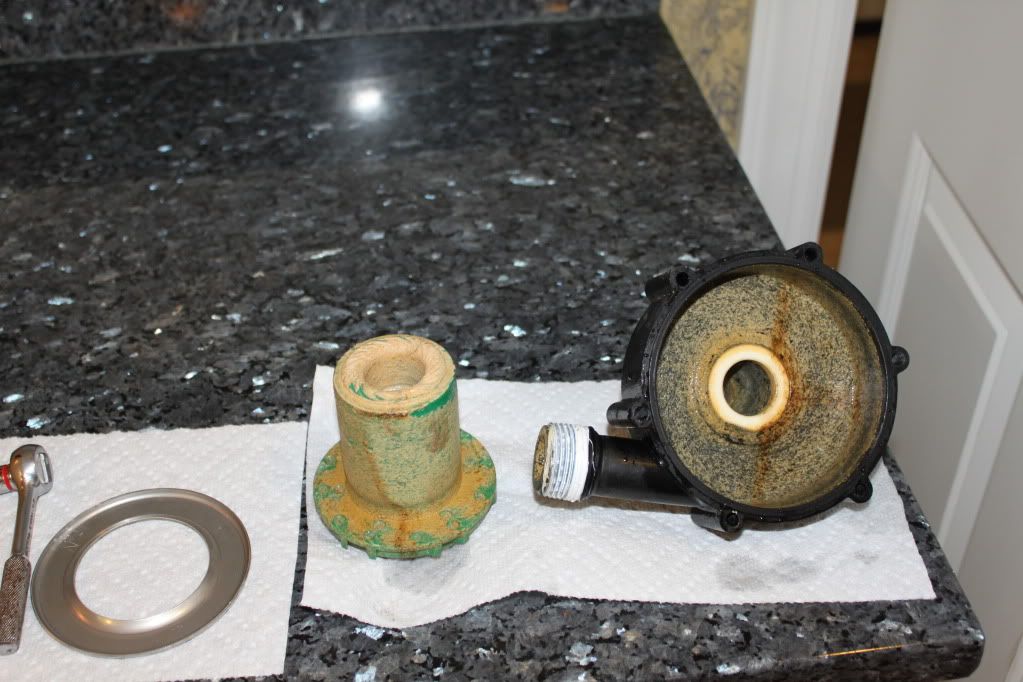
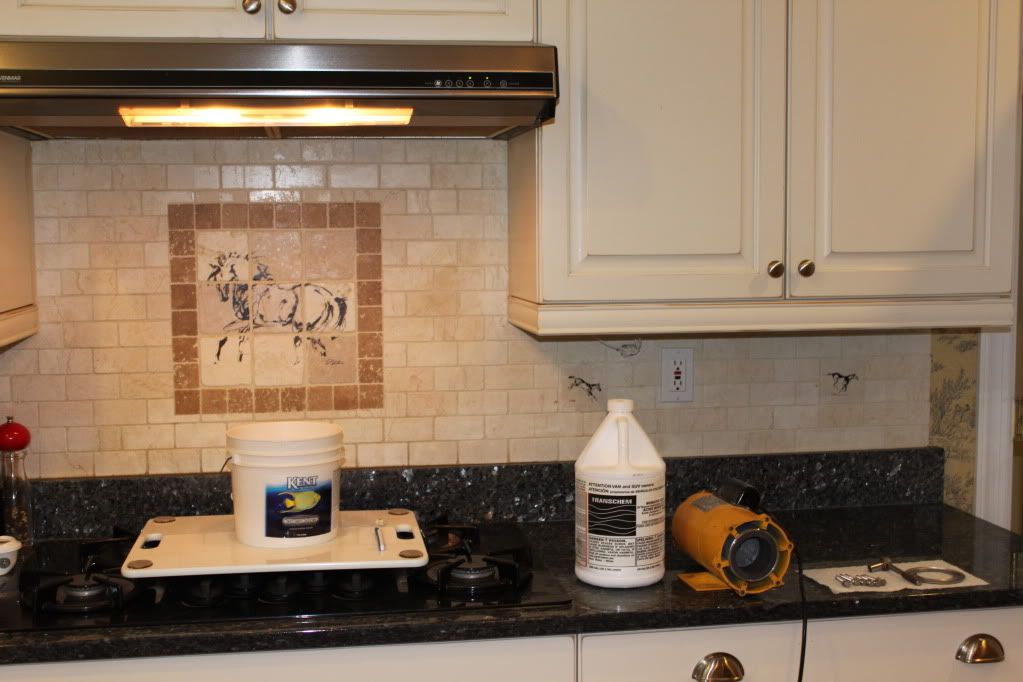
There's so much to share I honestly don't know where to begin. I've made a ton of changes, trimmed back hugely, removed two entire colonies, and most importantly for this post, struggled with excessive calcium carbonate buildup. Suffice to say I'm trying to figure out why I put a newly cleaned pump into service in November and it seized up in April. At the moment I'm trying to figure out if pH swings due to dosing B-Ionic are the cause. My methodology is simply to stop dosing for a while and up the calcium reactor to see if that stops the buildup then assuming that doesn't stop the buildup I'll shut off the calcium reactor and see if the removal of CO2 makes the difference then if that doesn't work I'll try something else. Fact: I'm growing Calciium Carbonate too fast. Answer I have no idea . . . .
Corals: Strange lessons . . . I gave Jason back a large colony of Tyree Purple Monster and oddly enough he's getting the same white band problem he had before starting at the base and progressing very slowly. Pathogen in his tank? Excessive flow? No idea but interesting . . . Along the same lines we both have been struggling to get Ice Fire Echinata to grow. I bought two frags from Vivid Aq. in CA and they died. Bought a colony from Jason. It died. Jason had several in the store and one colored up dramatically in his SPS sale tank while the one in his display wiped. Then he moved the one in his SPS sale tank to his display and it started to slowly wipe at the base. So assuming the worst I convinced him to give the piece to me and I broke it into several pieces, dipped it in Revive, and have put the pieces in various places in my system. So far all the pieces are surviving, but we'll see.
My big "Bugga a Boo" right now is pH. It's driving me mad that I can't control the pH, but the nightly increase in CO2 is overwhelming. I'd really like to know how much night algae growth in a refugium on a reverse cycle I would need to completely overcome the cycle, working . . . . standby . . . someday we'll know.


Corals: Strange lessons . . . I gave Jason back a large colony of Tyree Purple Monster and oddly enough he's getting the same white band problem he had before starting at the base and progressing very slowly. Pathogen in his tank? Excessive flow? No idea but interesting . . . Along the same lines we both have been struggling to get Ice Fire Echinata to grow. I bought two frags from Vivid Aq. in CA and they died. Bought a colony from Jason. It died. Jason had several in the store and one colored up dramatically in his SPS sale tank while the one in his display wiped. Then he moved the one in his SPS sale tank to his display and it started to slowly wipe at the base. So assuming the worst I convinced him to give the piece to me and I broke it into several pieces, dipped it in Revive, and have put the pieces in various places in my system. So far all the pieces are surviving, but we'll see.
My big "Bugga a Boo" right now is pH. It's driving me mad that I can't control the pH, but the nightly increase in CO2 is overwhelming. I'd really like to know how much night algae growth in a refugium on a reverse cycle I would need to completely overcome the cycle, working . . . . standby . . . someday we'll know.
Friday, March 4, 2011
He's back . . .
Well after a week of ski vacation in Colorado and a couple days of work, I'm finally back!
Let's start with the latest installment of "It's always something" . . . two frags broke free of their glue including my Pearlberry frag which wiped, the RO top off which is running through a home rigged Nilsen reactor while I wait for my new one to arrive clogged and the top off stopped for several days, my file fish jumped into the overflow and had to be carefully extracted, and one of my ballasts needed a capacitor replacement . . . but heh . . . all in a days work for an aquarist . . . haha!
Interestingly enough Jason from GA lost his Strawberry Shortcake colony which was spectacular. Keep in mind that he too added ReefBrite LEDs over his system only a few short weeks ago. Although this is highly anecdotal and unscientific is it possible that something about intense blue LED lighting kills certain corals. My colony is holding on, but still not really recovering its coloration even after I moved it to the lowest possible position in my tank.
On another note be sure to get a copy of Coral Magazine this month and look at pg 53 for shots of my tank! Sadly the blue Radium lighting distorted the photo in print production, but none the less, I am proud to be included in such a worthy publication!
Oh and one last note . . . I'm in a discussion on RC regarding refractometers. I am not convinced that certain models sold as "seawater" refracts really are indexed for natural sea water and so far my testing at home seems to bear this out, but I still have much to learn with regard to this topic so I am holding back on any final judgement.
Let's start with the latest installment of "It's always something" . . . two frags broke free of their glue including my Pearlberry frag which wiped, the RO top off which is running through a home rigged Nilsen reactor while I wait for my new one to arrive clogged and the top off stopped for several days, my file fish jumped into the overflow and had to be carefully extracted, and one of my ballasts needed a capacitor replacement . . . but heh . . . all in a days work for an aquarist . . . haha!
Interestingly enough Jason from GA lost his Strawberry Shortcake colony which was spectacular. Keep in mind that he too added ReefBrite LEDs over his system only a few short weeks ago. Although this is highly anecdotal and unscientific is it possible that something about intense blue LED lighting kills certain corals. My colony is holding on, but still not really recovering its coloration even after I moved it to the lowest possible position in my tank.
On another note be sure to get a copy of Coral Magazine this month and look at pg 53 for shots of my tank! Sadly the blue Radium lighting distorted the photo in print production, but none the less, I am proud to be included in such a worthy publication!
Oh and one last note . . . I'm in a discussion on RC regarding refractometers. I am not convinced that certain models sold as "seawater" refracts really are indexed for natural sea water and so far my testing at home seems to bear this out, but I still have much to learn with regard to this topic so I am holding back on any final judgement.
Tuesday, February 15, 2011
It's always something . . .
So today's installment of "It's Always Something" is brought to you by Tunze. Since getting my new 6105s, I have been fiddling with positioning to try and find a position that doesn't blow my sand all over. Yesterday, I tried a slightly new position, but during the night the Tunze moved slightly on it's own because the new ball style holders are not very tight. The result was the powerhead was aimed up and sideways such that it splashed water over the sides all night long. Not gallons but liters or quarts worth and certainly making a mess.
Last few days have been busy for the tank as I did some significant position changes. The primary purpose was to make room for the continued growth of my Loripes colony which was fast becoming over run by my Seriatopora and my Purple Monster. In addition I shifted several colonies around including the bleached Strawberry Shortcake, the Nasuta, and my Stylo frag from Keith B. as well as a few others. Now comes the hurry up and wait part to see if the changes were worthwhile. In the meantime the right side looks amazingly bare now without the great big pink birdsnest on top : ( Hopefully the Stylo will grow faster than it has so far as I'm trying something new and feeding Elos amino acids. I decided to give it a try after reading an article on Amino Acids at CoralScience.org.

Last few days have been busy for the tank as I did some significant position changes. The primary purpose was to make room for the continued growth of my Loripes colony which was fast becoming over run by my Seriatopora and my Purple Monster. In addition I shifted several colonies around including the bleached Strawberry Shortcake, the Nasuta, and my Stylo frag from Keith B. as well as a few others. Now comes the hurry up and wait part to see if the changes were worthwhile. In the meantime the right side looks amazingly bare now without the great big pink birdsnest on top : ( Hopefully the Stylo will grow faster than it has so far as I'm trying something new and feeding Elos amino acids. I decided to give it a try after reading an article on Amino Acids at CoralScience.org.

Wednesday, February 9, 2011
It's Always Something
Today's it's always something was broken coral. The Damsels have been doing some strange territorial dancing and knocked down the recovering coral frag and the zoos ate away at the body of the montipora so much that it actually fell over under it's own weight. I tried to fix the monti back in place, but no luck then I tried to fix the fallen frag and it took me about 5 tries to get the glue to stick. The whole endeavor cost me about 30 minutes of time . . . it's always something . . . the good news is because my tank is so low and open I just reached in and fixed everything. No moving fixtures, no bringing in a ladder, no bending over the top of the tank, just nice and simple reach and fix. Oh and I almost forgot this morning I found that the Deltec stirrer was stuck. The extra kalk powder I added gummed up the rotating arm so I had to dump it out and put in the normal one cup. Looks like the kalk stirrer is going to become a bi-weekly chore (see earlier post on pH study in the kalk stirrer) . . . it's always something.
Improvement.
Continuing to see rapid improvement in the frag that was bleached while the mother colony continues to struggle. I did raise the lights higher, but obviously it's not enough to help given the position of the main colony. May have to cut it out and move it lower somehow.


Subscribe to:
Posts (Atom)